

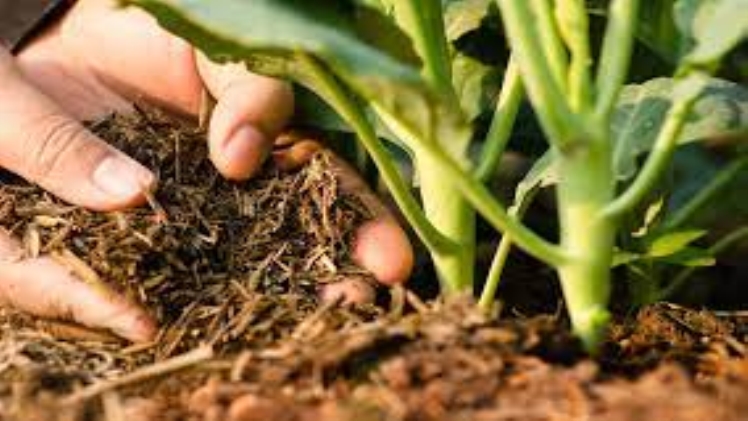
Not all soils naturally have all of the nutrients that they need for their optimum health and crop productivity. Deep-rooted crops such as alfalfa and comfrey can be grown to bring up nutrients from below the range of most roots, then composted and added to the topsoil. Additionally, when cured compost is added to the soil, nutrients that were previously unavailable in the soil may be made available by the biogeologic cycle.
(In this cycle, humic acid—which is produced from the decomposition process and is contained in the cured compost—along with the carbonic acid developed around the plant’s roots, can increase soil microbial activity, decompose larger minerals, and possibly alter soil pH so that previously unavailable nutrients are made available.) However, if the needed nutrients are not in the deeper regions of the soil, they will not be present in the cured compost.
In other words, if the nutrients are not present, the cured compost made from plants grown on the nutrients-decient soil will not contain the on the nutrients-decient soil will not contain the decient nutrients, and the soil will still be unbalanced even after the cured compost is added. Therefore, in some cases, you may need to bring nutrients in the form of organic fertilizers into the mini-farm from the outside. Your goal should be to bring in a minimum of outside organic fertilizers and maintain them cycling in the system through compost. You may also decide to bring carbonaceous materials into the garden or mini-farm in the beginning so su+cient humus can be added to the soil.
Conclusion
Humus is the food of soil microorganisms that are responsible for creating good soil structure and soil fertility. It also helps hold the nutrients in the soil. If there is not enough humus (about 4% to 6% organic matter in temperate regions; about 3% organic matter in tropical ones), nutrients that are returned to the soil in the form of cured compost may leach out.
