

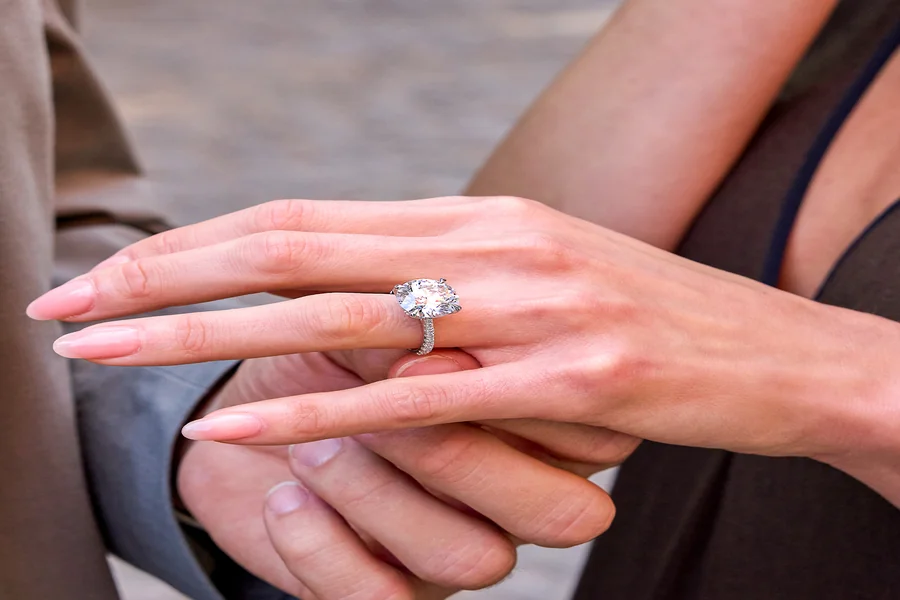
Design expectations around engagement rings have evolved. Buyers today are thinking about meaning, setting, long-term wear, and how a ring reflects personal style. Within this shift, lab diamond engagement rings are playing a role in broadening what feels achievable in fine jewelry.
Here are the key ways they’re expanding design possibilities.
1. Greater Flexibility in Center Diamond Size
One of the most noticeable shifts is in scale. Lab-grown diamonds often give buyers the freedom to choose larger carat sizes while staying within their budget. This makes it possible to prioritize size without sacrificing overall design.
For example, someone might opt for a three-carat oval in a clean solitaire setting or a bold emerald cut accented with side stones. The overall aesthetic doesn’t have to be scaled back to meet financial constraints — the design vision can remain fully intact.
2. More Room for Detailed Settings
Intricate settings, such as hidden halos, double halos, split shanks, and multi-row bands, require multiple diamonds working together in a cohesive design. With lab options, it becomes easier to match color and clarity grades across the ring while staying within budget.
This makes more complex structures feel attainable. Instead of choosing between a larger center diamond or detailed craftsmanship, buyers can balance both.
3. Balanced Multi-Stone Designs
Three-stone rings, five-stone bands, and graduated side-diamond settings require visual harmony. Matching proportions across multiple diamonds can influence the final look significantly.
Lab diamonds provide room to align size and grading across all elements of the ring. This supports symmetry and balance in designs that rely on more than a single focal point.
4. Architectural and Modern Structures
Fine jewelry design has been influenced by architecture, such as clean lines, open galleries, geometric silhouettes, and structured profiles. Rings with elevated settings or sculpted metalwork often require significant craftsmanship, as these designs involve detailed metalwork and precise construction.
With lab options allowing greater size flexibility, designers can create a stronger visual impact in these architectural settings without disrupting proportion.
5. Encouraging Design-Led Decision Making
Perhaps most importantly, lab diamonds are shifting the order of decision-making. Instead of starting with budget limitations, buyers often begin with a design vision of shape, scale, and structure and then refine from there.
Final Thought
The growth of lab-created diamond engagement rings isn’t about replacing traditional designs. It’s about expanding what’s possible within fine jewelry. Larger center diamonds, detailed settings, architectural structures, and balanced multi-stone designs are becoming more accessible.
For those exploring these possibilities, brands such as With Clarity offer a wide range of both traditional and lab diamond engagement rings, allowing buyers to compare styles and create designs that reflect their personal aesthetic while staying aligned with their budget.
