

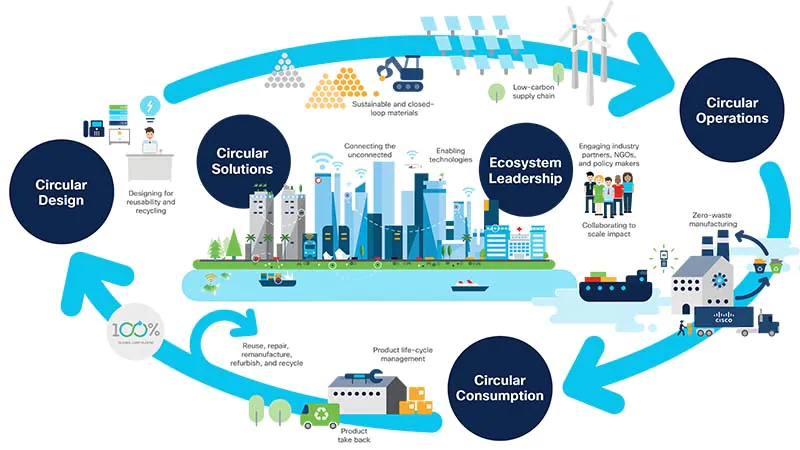
Since the inception of the Industrial Revolution, societies across the globe have followed a ‘take-make-use-dispose’ linear pattern of goods consumption. It has led to a culture of consumerism that has resulted in an enormous amount of waste. Australia currently produces over 540 kg of garbage in a household every year. It estimates a total of 67 million tonnes of waste all over the country, disposed of in a landfill. In contrast, a circular economy highlights the importance of using sustainable production processes and the habit of reusing, recycling and repairing. It helps reduce billions of tonnes of waste that reach landfills and oceans. It benefits not only the environment and the consumers but the businesses too.
What is a Circular Economic Model?
Essentially, in a circular economy, the industries, businesses and customers consume materials, resources, and products circularly, not a linear one. Rather than throwing them away, manufacturers reuse a maximum amount of the resources by putting them back into the economy and production cycle. To achieve a truly sustainable circular economic model, individuals, businesses and governments must dispense a great effort in making a systematic change.
Efforts By the Australian Government to Promote Circularity
The Australian government has been actively working towards reducing its waste by 80% by 2030. To promote circularity across Australian-based companies, it has offered nearly 70 billion AUD as incentives in grants. It is committed to reprocessing 645,000 additional tonnes of paper, plastic, glass and tyre waste each year. The Recycling and Clean Energy National Manufacturing Priority suggests areas of improvement in producing recyclable products, services and packaging. It also focuses on promoting innovative technology for remanufacturing, using organic materials like wool to manufacture recyclable clothing, and utilising clean energy components like wind turbines. Successful implementation of a circular economic model in the food, transport, clothing and construction industry can create the economic benefit of over 23 billion AUD in GDP by 2025.
How Can Businesses Benefit from Adapting the Model?
Opportunities to Innovate, Scale Up and Stand Out
Adapting a circularity model in production through systematic changes can increase expenditure for a business initially; it provides a valuable opportunity for companies to innovate and gain profits in novel ways. By reducing dependency on producing new raw materials and manufacturing products from scratch, they can open various other vectors to scale up the business. One way to accomplish it is to adopt innovative business models like Product-as-a-Service (PaaS) to refurbish used products for profit and share the assets with their partners. It reduces investment in new materials and production costs.
Reduces Loss Due to Waste and Streamlines Production
This model stresses the importance of prolonging the usage of products by designing them to be reusable and recyclable. It directly leads them to reduce the loss of valuable resources in the form of waste. Innovative methods like predictive models help provide ongoing servicing and maintenance to eliminate wasteful manufacturing. It also helps them streamline the production process through intelligent resources.
Improves Brand Image and Customer Loyalty
Due to the increasing number of Australians voting for sustainability, the companies that commit to sustainability and focus on improving environmental conditions would gain higher preference over other companies. Some basic ways to demonstrate sustainability are, using eco-friendly packaging and organic raw materials, following sustainable production processes and providing equal pay. Adapting the branding strategy to a circular economy can help build strong customer loyalty and gain a competitive edge over other businesses in the market. Proving that the sustainable products of the brand can stand the test of time can enable its consistent growth.
